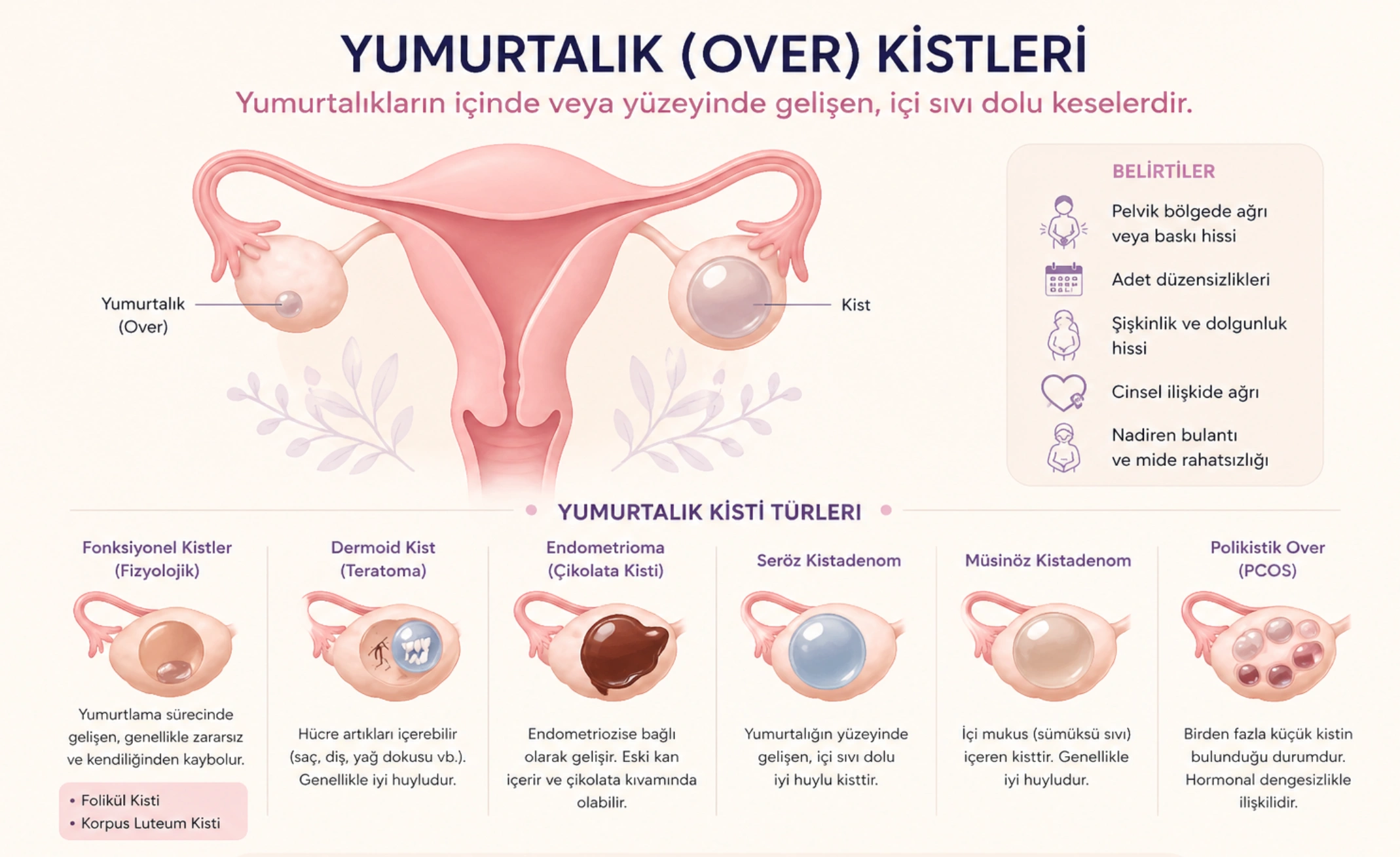
Ovarian cysts are fluid-filled structures that can develop within or on the surface of the ovaries. They are quite common in women and are often detected incidentally during routine gynecological examinations.
Many ovarian cysts remain asymptomatic. However, depending on the size, type, and location of the cyst, some patients may experience symptoms such as pelvic pain, pressure, or discomfort.
Most ovarian cysts are benign and do not carry a cancer risk. In women of reproductive age, the majority of cysts are associated with natural physiological processes and may resolve spontaneously.
Menstrual irregularities are not always directly related to ovarian cysts. Therefore, proper evaluation should always be performed by a physician.
Why Do Ovarian Cysts Develop?
Ovarian cysts may form due to various mechanisms. The most common causes include:
• Ovulation (Natural Cycle)
Functional cysts are the most frequently observed type during reproductive years. These cysts are typically temporary.
• Polycystic Ovary Syndrome (PCOS)
Hormonal imbalances may lead to the formation of multiple small cystic structures.
• Dermoid Cysts
Usually benign, these cysts may contain different tissue components.
• Endometriomas (Endometriosis Cysts)
Endometriosis may result in cyst formation within the ovaries.
• Pregnancy-Related Cysts
Certain cysts may develop due to hormonal changes during pregnancy.
• Pelvic Infections
In rare cases, cystic formations may be associated with infections.
Do Ovarian Cysts Cause Symptoms?
Many ovarian cysts do not produce noticeable symptoms. When symptoms occur, they may include:
• Pelvic or groin pain
• Sensation of pressure or fullness in the abdomen
• Discomfort during intercourse
• Abdominal bloating in some patients
The severity of symptoms may vary depending on the cyst’s size and characteristics.
Do Ovarian Cysts Require Treatment?
Not all ovarian cysts require treatment. Management strategies are determined based on factors such as:
• Size of the cyst
• Type of the cyst
• Patient’s age
• Presence of symptoms
Observation (Monitoring)
Small, functional cysts often only require regular follow-up.
Medical Treatment
Hormone-regulating therapies may be considered in selected patients.
Surgical Treatment
Surgery may be recommended for large, persistent, or suspicious cysts.
Minimally invasive surgical techniques may be preferred in suitable cases.
When Should You Consult a Physician?
Gynecological evaluation is recommended in cases of:
• Persistent pelvic or groin pain
• Sudden, severe pain
• Noticeable abdominal swelling
• Detection of a cyst during examination
Early assessment is important to prevent potential complications.
General Considerations
Ovarian cysts are common and are typically benign. With accurate diagnosis and regular monitoring, most cysts can be managed safely.
Not every cyst requires surgical intervention. The most appropriate approach is determined following an individual physician evaluation.
FAQ
They are fluid-filled structures that form inside or on the surface of the ovary.
Most are benign and may resolve on their own.
Cysts that grow, cause pain, or appear suspicious require treatment.
Observation, medical therapy, or surgical methods may be used.
Some cysts may affect ovulation, but most do not prevent pregnancy.