
Fibroids are among the most common gynecological conditions in women. Many are discovered incidentally and do not always require treatment. However, in some cases, fibroids can significantly affect quality of life.
What Are Uterine Fibroids?
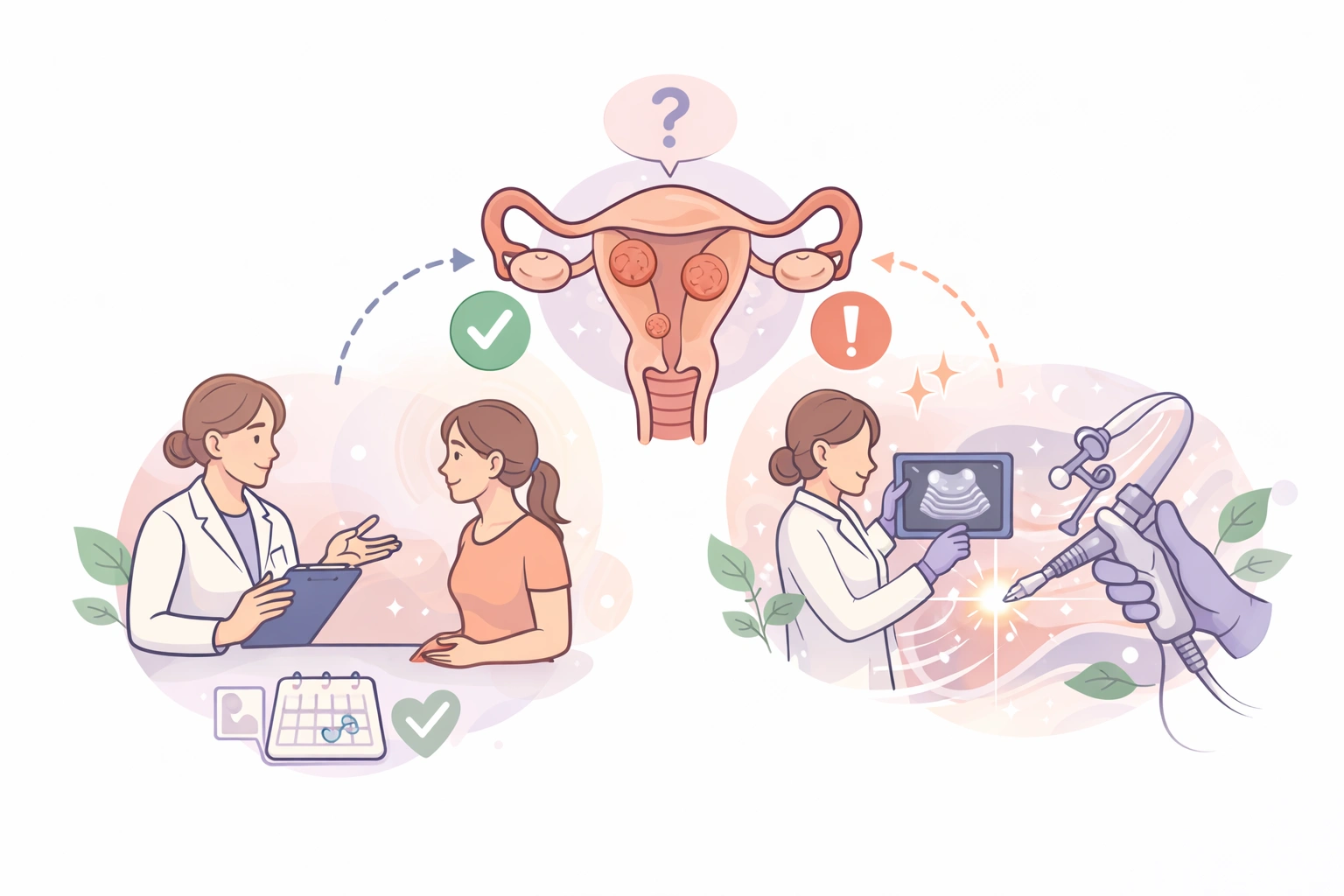
Fibroids are benign tumors that develop from the muscular tissue of the uterus. They can vary in size and number and may grow in different areas of the uterus.
Symptoms Associated With Fibroids
Fibroids may cause symptoms such as:
- Heavy or prolonged menstrual bleeding
- Bleeding between periods
- Pelvic or lower back pain
- Abdominal pressure or bloating
- Frequent urination or constipation
- Difficulty conceiving
- Recurrent miscarriages
When Is Monitoring Sufficient?
Regular follow-up may be enough if fibroids:
- Are small in size
- Do not cause symptoms
- Do not grow rapidly
- Are not affecting fertility
Routine gynecological exams and ultrasound monitoring are usually recommended.
When Do Fibroids Require Treatment?
Treatment may be necessary if fibroids cause:
- Severe menstrual bleeding leading to anemia
- Rapid growth
- Significant pain or pressure symptoms
- Infertility or pregnancy complications
Treatment decisions depend on age, symptoms, fibroid size, location, and future pregnancy plans.
Fibroid Treatment Options
Medication
Used to control symptoms but does not eliminate fibroids.
Hysteroscopic Fibroid Removal
A minimally invasive procedure for fibroids inside the uterine cavity.
Laparoscopic (Minimally Invasive) Surgery
Allows fibroid removal through small incisions.
Open Surgery
May be required for very large or multiple fibroids.
Can Fibroids Turn Into Cancer?
The risk of fibroids becoming cancerous is extremely low. Rapidly growing fibroids should still be evaluated carefully.
What Happens If Fibroids Are Not Treated?
Asymptomatic fibroids may remain stable for years, but untreated symptomatic fibroids can lead to anemia, pain, and reduced quality of life.
FAQ
No. Small fibroids that do not cause symptoms and show no signs of growth are often managed with regular gynecological examinations and ultrasound follow-up only. The decision to treat is based on the patient’s symptoms rather than the presence of the fibroid itself.
Fibroids may require treatment if they cause heavy or prolonged menstrual bleeding, anemia, rapid growth, pain, pressure-related symptoms, difficulty conceiving, or recurrent miscarriages.
Yes. Some fibroids can distort the structure of the uterus, making pregnancy more difficult or increasing the risk of miscarriage. In women planning pregnancy, the size and location of fibroids play an important role in treatment decisions.
Not always. In some patients, symptoms can be managed with medical (drug) therapy. However, surgical treatment may be preferred for large fibroids, rapidly growing fibroids, or those causing significant symptoms. The most appropriate treatment method is determined through a physician’s evaluation.
Fibroids are benign (non-cancerous) growths, and the risk of them becoming cancerous is very low. However, fibroids that grow rapidly or appear after menopause should always be evaluated carefully and in detail.
Recent Posts
What Is Uterine Wall Thickening? Causes, Symptoms, and Treatment Methods

Vaginoplasty Results: The Effects of Surgical Intervention and Expectations

Symptoms of Vaginal Laxity: What Women Need to Know